

The Defensive Walls of the City of Padova: Archaeometric Analysis of Construction Materials
Introduction
The dissertation investigates the construction materials of Padua’s defensive walls, a complex system developed between the twelfth and sixteenth centuries. The historical starting point is the siege of 1509, after which Venetian authorities intensified the city’s fortifications. Today, the Renaissance defensive system extends for approximately 11 km and survives to a remarkable degree, alongside significant portions of the earlier medieval walls.
The central problem addressed by Clarysse is that centuries of destruction, reconstruction, alteration and restoration have produced a highly heterogeneous construction system. A reliable understanding of its materials is therefore essential before compatible conservation interventions can be designed.
The research focuses specifically on the structural mortars of the communal, Carrarese and Renaissance wall systems. Its main objectives are to identify the composition and origin of the binders, investigate changes in raw materials and production techniques through time, and relate chemical and mineralogical characteristics to the mortars’ mechanical behaviour.
Five complementary analytical approaches are employed: X-ray powder diffraction (XRPD), polarized optical microscopy (OM), scanning electron microscopy with energy-dispersive X-ray spectroscopy (SEM-EDS), nuclear magnetic resonance spectroscopy (NMR), and mechanical testing, particularly compressive-strength testing.
The broader conservation objective is to establish a scientifically grounded characterization of the historic materials so that future repair mortars can be selected for compatibility rather than simply replacing apparently deteriorated material. The thesis also seeks to contribute to the relatively limited literature on historic hydraulic mortars and Venetian construction technology.
The research proceeds from historical and theoretical context (Chapter 2), through a review of previous research (Chapter 3), experimental methodology (Chapter 4), analysis and interpretation of results (Chapter 5), and finally an integrated set of conclusions (Chapter 6).
CHAPTER 2 – THEORETICAL FRAMEWORK
This chapter establishes the historical and material context necessary to interpret the analytical results. It first reconstructs the development of Padua’s successive defensive systems and then introduces the principal components of structural mortars: binders, aggregates, additives and admixtures.
2.1 The Paduan City Walls
Padua’s present defensive landscape results from several successive fortification campaigns. Before the Renaissance walls, three medieval circuits were developed between the late twelfth and fourteenth centuries. Their form reflects both the city’s physical expansion and changes in military technology and political control.
2.1.1 Medieval City Walls
Evidence concerning Padua’s earliest post-Roman fortifications is fragmentary. The Bacchiglione River offered natural protection but also influenced where artificial defences were required.
A more clearly documented defensive system appeared during the communal period. Between approximately 1195 and 1210, a substantial wall circuit was constructed or consolidated. These walls served both military and symbolic purposes: they physically protected Padua while defining the identity and limits of the medieval city.
Urban expansion subsequently produced settlements beyond this first circuit, requiring further defensive construction. Additional medieval circuits therefore developed, particularly under Carrarese rule, reflecting Padua’s territorial growth and changing political circumstances. The first communal wall remains much better preserved than the later medieval extensions.
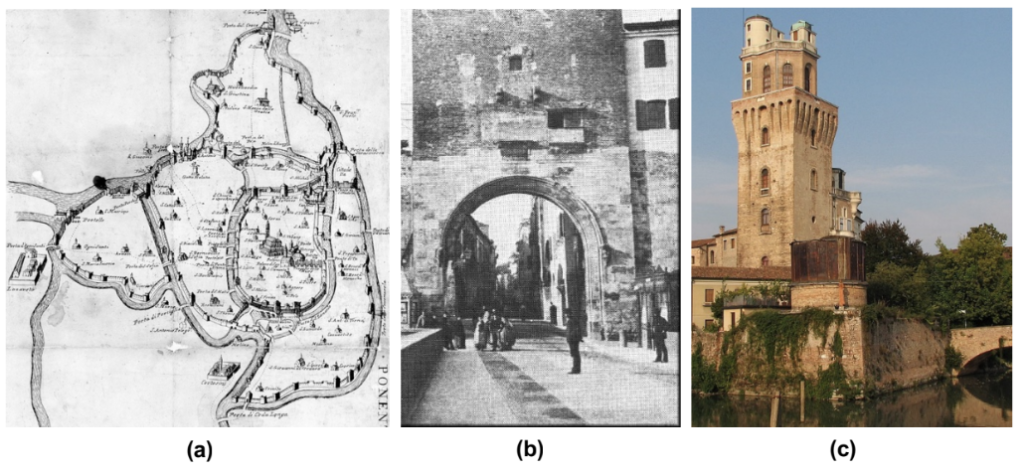 The medieval walls and their corresponding constructions consist of three subsequent construction phases (a) [3], of which mainly the earliest communal walls (b/c)[4] have survived [5].
2.1.2 Renaissance City Walls
The Renaissance fortifications resulted principally from the transformation of warfare following the increasing effectiveness of artillery.
The events of 1509 demonstrated the inadequacy of older medieval defensive systems against gunpowder artillery. Under Venetian rule, Padua’s fortifications were consequently transformed into an extensive modern defensive system employing walls, bastions and other structures capable of resisting artillery attack.
The resulting Renaissance walls constitute the largest and best-preserved component of Padua’s defensive system and provide most of the material examined in the dissertation.
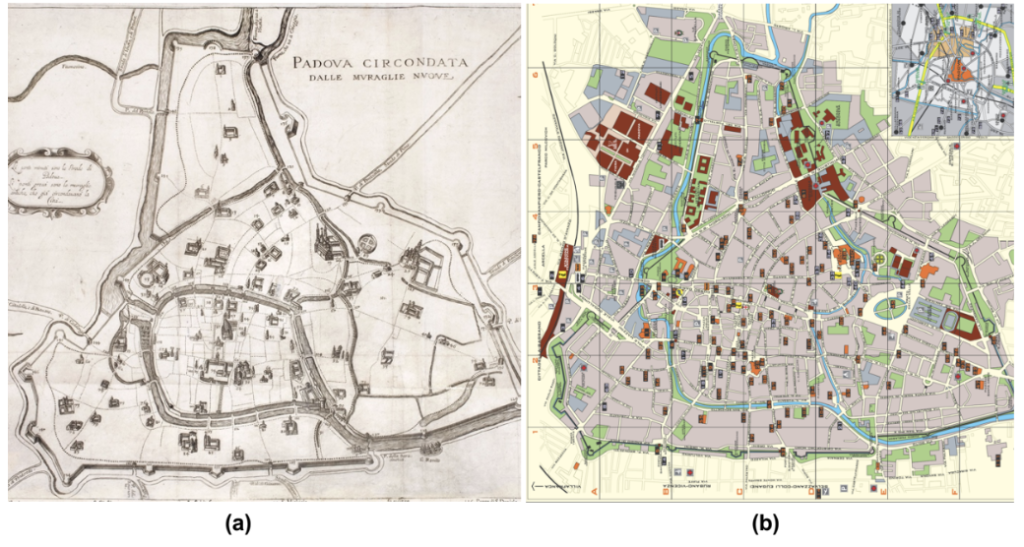 The walls constructed in the context of the 1509 conflict between Venice and the Lega di Cambrai define the shape of the city up until today [1]. (a) Plan of Padua, Vicenzo Dotto 1623. (b) Tourist map of Padua, 2024 [Pinterest].
2.1.3 Construction and Materials
The surviving walls were predominantly constructed using rubble masonry. Behind comparatively regular external brick faces lies a heterogeneous core composed of rubble and reused demolition material bonded with mortar.
The resulting construction is essentially a three-layer system: brick facing – rubble masonry core – brick facing.
This technique, identified as muratura a sacco, produced a large and resistant wall cross-section without requiring the entire structure to consist of carefully executed masonry.
At the beginning of the research, the principal working hypothesis was that the mortar binder consisted mainly of natural hydraulic lime. One of the central purposes of the experimental programme was therefore to verify this hypothesis archaeometrically.
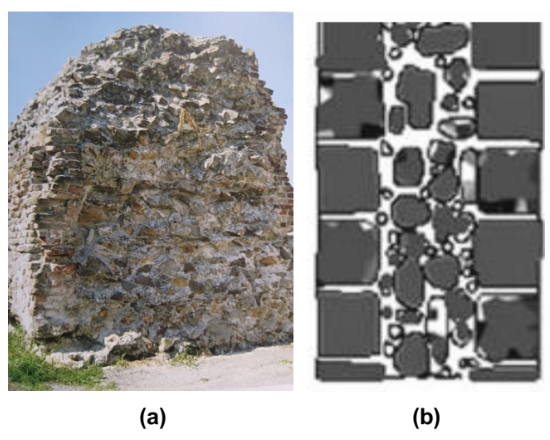 The walls of Padua are comprised of three layers: brick – rubble masonry – brick. This technique is called muratura a sacco. (a) Section of the meridional relief wall at Castelnuovo [6, p. 27]. (b) Graphic representation of a triple vestment wall [7, p. 3].
2.1.4 Conservation and Preservation
Padua remained largely contained within its historic walls until the twentieth century. Subsequent urban expansion resulted in alterations and demolition of parts of the fortification system.
Systematic recognition of the walls as an integrated cultural asset developed relatively late. Although conservation interventions took place from the 1980s onwards, many were isolated and did not adequately address the fortifications as a coherent system.
A more comprehensive restoration initiative began after 2017, with works starting in 2019 and including the restoration of Bastione Impossibile in 2021. These interventions strengthened the need for detailed knowledge of the original construction materials, particularly to ensure the physical, chemical and mechanical compatibility of conservation materials.
2.2 Mortars: A Brief Overview
This section introduces mortar as a composite material whose behaviour results from the interaction between binder, aggregates, pores, additives and admixtures.
Understanding each component separately is necessary for interpreting historic mortar samples and distinguishing intentional raw materials from reaction products or deterioration phenomena.
2.2.1 Binders
The binder provides cohesion and adhesion between the inert components of mortar.
Clarysse distinguishes primarily between aerial binders, which harden through reactions involving air, and hydraulic binders, which can harden in the presence of both air and water. Natural hydraulic lime belongs to the latter category.
Different binders also result from different production processes, usually involving the calcination of limestone or gypsum, and can subsequently be identified through the mineral phases remaining or developing within the hardened material.
2.2.2 Aggregates
Aggregates constitute much of the mortar volume and help limit shrinkage and cracking associated with water loss.
They can originate naturally from river, marine or pyroclastic deposits or be produced by crushing rocks. Natural grains tend to be more rounded, whereas crushed aggregates generally display more angular morphologies.
Historic mortars may also contain artificial or recycled aggregates, including fragments of terracotta, ceramics and brick.
Aggregates can furthermore be classified as passive or active, depending on whether they participate chemically in reactions with the binder. This distinction is particularly important for identifying pozzolanic and hydraulic behaviour.
Clarysse also emphasizes that aggregates must be distinguished from lime lumps, which may represent poorly mixed binder, residues of limestone firing or carbonated lime fragments.
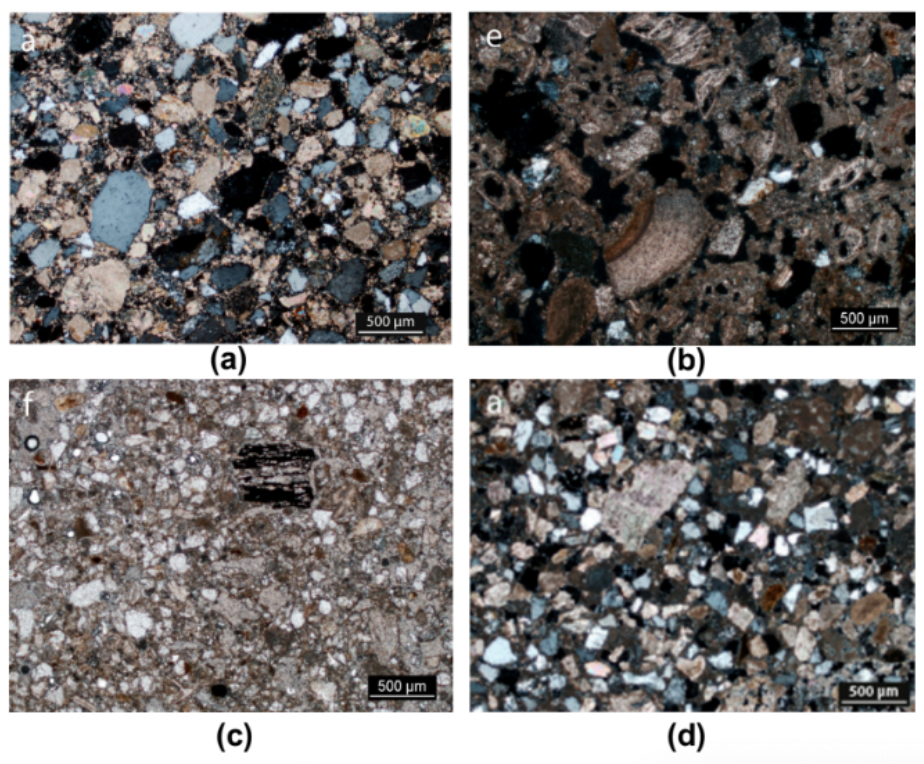 Types of aggregates throughout Apulia. (a) fine sand in bedding mortar in Lucera (b) calcarenite rubbles & very fine sand (c) in plasters from Lamapopoli, (d) fine clayey sand in Siponto [17].
2.2.3 Additives and Admixtures
Additives and admixtures are intentionally introduced to alter setting behaviour or final mortar properties.
Of particular relevance are pozzolanic materials, typically rich in reactive silica and alumina. Volcanic ash and fired clay, for example, can transform an otherwise aerial lime mortar into a material exhibiting hydraulic behaviour.
This theoretical distinction becomes important later because ceramic and brick fragments identified in several Paduan mortars may have contributed actively to hydraulic reactions rather than functioning only as inert aggregate.
CHAPTER 3 – LITERATURE REVIEW
Chapter 3 establishes the scientific framework for interpreting historic hydraulic lime mortars. Clarysse notes that existing research often concentrates on mineralogical composition while giving less attention to physical and mechanical properties, even though all three are necessary to understand structural performance and design compatible repair mortars.
3.1 Hydraulic Lime Mortars
The literature review begins from the hypothesis that much of the original mortar in Padua’s walls is based on natural hydraulic lime.
Lime mortars originate from calcined limestone but can be either hydraulic or non-hydraulic. Aerial lime hardens principally through carbonation, whereas hydraulic lime additionally undergoes reactions involving clay minerals, lime and water.
Natural hydraulicity can result from clay already present in the limestone. Artificial hydraulicity can instead be introduced by adding reactive materials such as pozzolans.
3.1.1 Chemical and Mineralogical Characteristics
The chemical and mineralogical behaviour of hydraulic lime mortars is governed by the composition of the raw limestone, calcination conditions, hydration, carbonation and reactions between lime and siliceous or aluminous components.
Reactive silica and alumina can combine with calcium to produce hydrated phases such as:
- C-S-H — calcium-silicate-hydrate
- C-A-H — calcium-aluminate-hydrate
- C-A-S-H — calcium-alumino-silicate-hydrate
These phases are fundamental indicators of hydraulic behaviour.
Carbonation progressively converts calcium hydroxide into calcium carbonate. Mineralogical analysis can therefore provide information not only about original raw materials but also about setting processes, ageing, reaction mechanisms and subsequent transformations.
The review establishes the interpretive framework later used to identify the Paduan mortars as natural hydraulic lime mortars.
3.1.2 Mechanical Characteristics
Mechanical behaviour cannot be attributed solely to binder chemistry. Strength is affected by numerous interacting variables, including binder-to-aggregate ratio, aggregate grading, porosity, hydraulicity, carbonation, curing, moisture, defects and the mortar’s state of conservation.
Hydraulic reactions generally contribute to higher mechanical performance because the formation of hydrated phases increases cohesion. Nevertheless, pores, cracks, weak interfaces, inclusions and heterogeneous mixing can substantially reduce strength.
Consequently, mechanical tests must be interpreted alongside mineralogical and microstructural analyses rather than independently.
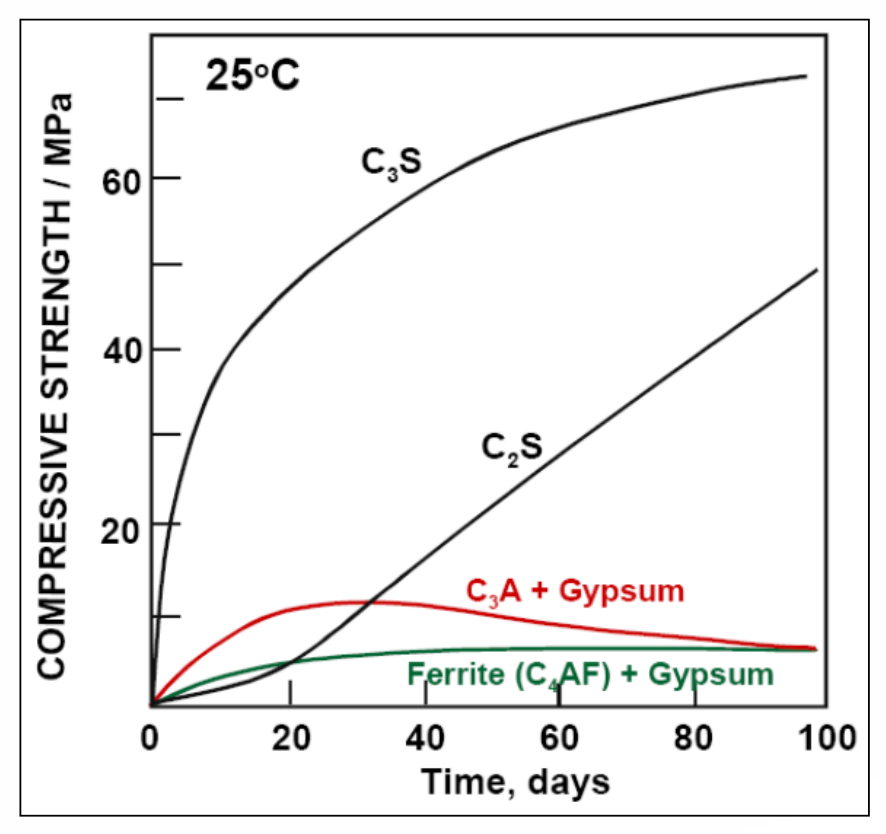 Different mineral phases have different hydration rates and contributions to the development of the mechanical strength of phases (Adapted from [15, p. 33]).
3.2 Mortar Characterisation
Because historic mortar is heterogeneous and evolves chemically over long periods, no single analytical method is sufficient for complete characterization.
The thesis therefore advocates a multi-analytical approach, combining observations at macroscopic, microscopic, mineralogical, chemical and mechanical scales.
3.2.1 Mortar Composition
Composition can be investigated through complementary methods such as optical microscopy, XRPD and SEM-EDS.
Optical microscopy identifies aggregate type, shape, grain distribution, binder texture, pores, cracks, lime lumps and ceramic fragments.
XRPD identifies crystalline mineral phases and therefore provides evidence concerning raw materials, carbonation products and hydraulic reaction products.
SEM-EDS combines high-resolution morphological examination with elemental chemical analysis, making it particularly valuable for studying binder–aggregate interfaces and reaction products.
Used together, these methods can distinguish original constituents from secondary products and reveal production technologies that would remain invisible through a single analytical technique.
3.2.2 Physical Properties
Physical properties, particularly porosity and pore structure, strongly influence mortar durability and behaviour.
Pore size and connectivity affect water transport, carbonation, salt crystallization and deterioration mechanisms. They therefore have direct consequences for both conservation and mechanical performance.
Historic repair design must account for these properties because an excessively dense or mechanically incompatible replacement mortar can alter moisture transport and damage adjacent historic masonry.
3.2.3 Mechanical Properties
Mechanical characterization establishes the relationship between material composition and structural behaviour.
Compressive testing is particularly useful but presents challenges because historic mortar samples rarely conform to standardized dimensions and frequently contain irregularities, aggregates, cracks or voids.
Mechanical values should therefore not be interpreted as isolated material constants. Instead, they must be related to mineralogy, microstructure, hydraulicity, defects and sample geometry.
CHAPTER 4 – MATERIALS AND METHODS
Chapter 4 describes the experimental programme, from sampling strategy to specimen preparation, analytical equipment and interpretation.
4.1 Sampling
Historic walls are intrinsically heterogeneous because they contain successive interventions, additions and repairs. Representative sampling was therefore essential.
A total of 24 samples was collected manually with hammer and chisel and divided into three chronological groups:
- Group 1: 2 samples from the communal walls;
- Group 2: 3 samples from the Carrarese walls;
- Group 3: 19 samples from Renaissance walls and bastions.
The predominance of Renaissance material reflects its greater survival, accessibility and architectural diversity rather than an assumption that it was intrinsically more important.
The sampling map in Figure 11 demonstrates the geographical distribution of the samples across the different wall systems, while the study consistently uses blue for communal, green for Carrarese and red for Renaissance samples.
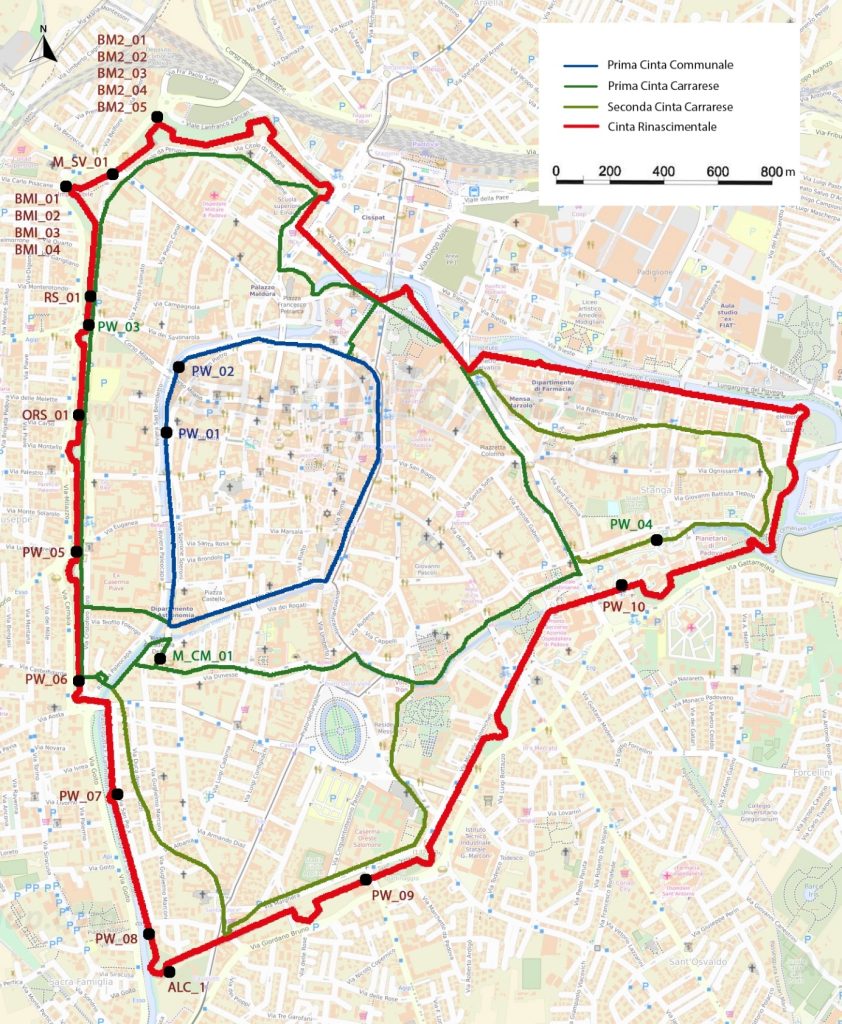 Map of the diverse city walls. The samples were taken from various positions and typologies of walls. A different color represents each group of samples throughout the result graphics. Blue = communal walls. Green = Carrarese walls. Red = Renaissance walls and bastions.
4.2 Analytical Procedures
The analytical strategy combines techniques capable of characterizing the samples at different scales. Bulk mortar, binder fractions, microstructures and mechanical specimens are investigated separately where appropriate.
This complementary strategy is fundamental because mineralogical identification alone cannot explain production technology or mechanical performance.
4.2.1 Optical Microscopy
Polarized optical microscopy is performed on prepared thin sections.
It enables direct examination of mortar texture, binder–aggregate relationships, grain morphology and distribution, ceramic fragments, lime lumps, pores, fractures and reaction rims.
The method is particularly important for distinguishing different technological traditions and evaluating whether aggregates were naturally sourced, deliberately selected, recycled or chemically reactive.
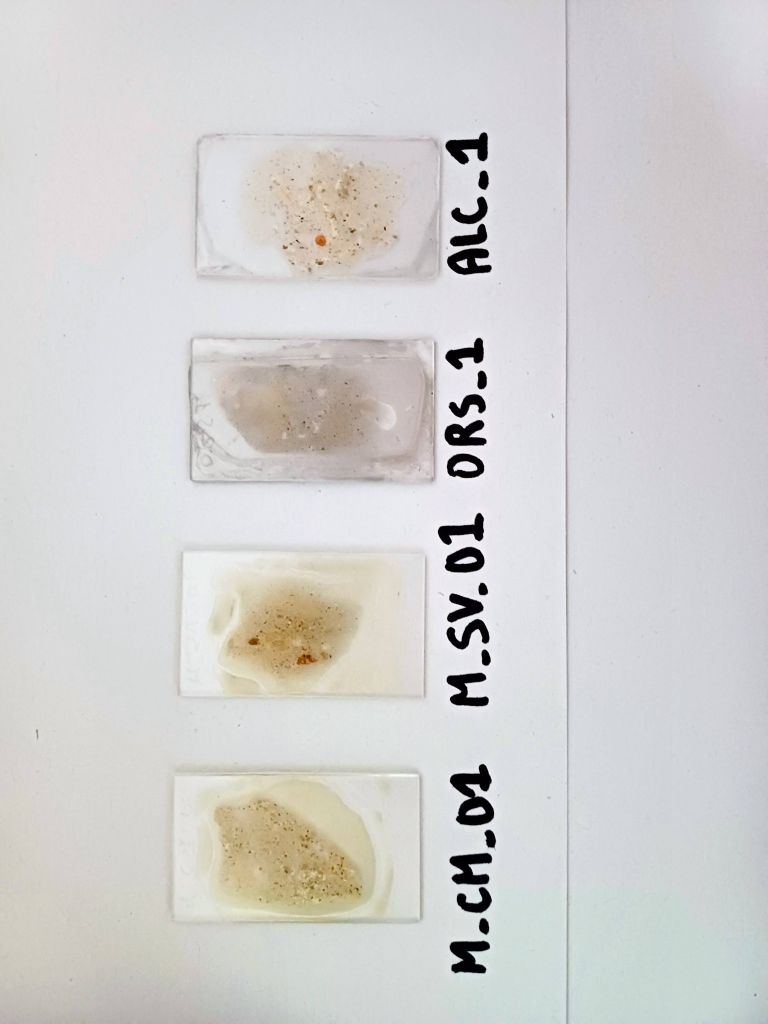 Four thin sections were prepared.
4.2.2 X-ray Powder Diffraction (XRPD)
XRPD is used to identify crystalline mineral phases.
Samples are powdered and analysed through diffraction patterns, allowing minerals associated with aggregates, binder, carbonation and hydraulic reactions to be distinguished.
Both bulk mortar and isolated binder fractions are examined, enabling the researcher to separate signals dominated by aggregate mineralogy from those more directly representative of the binder.
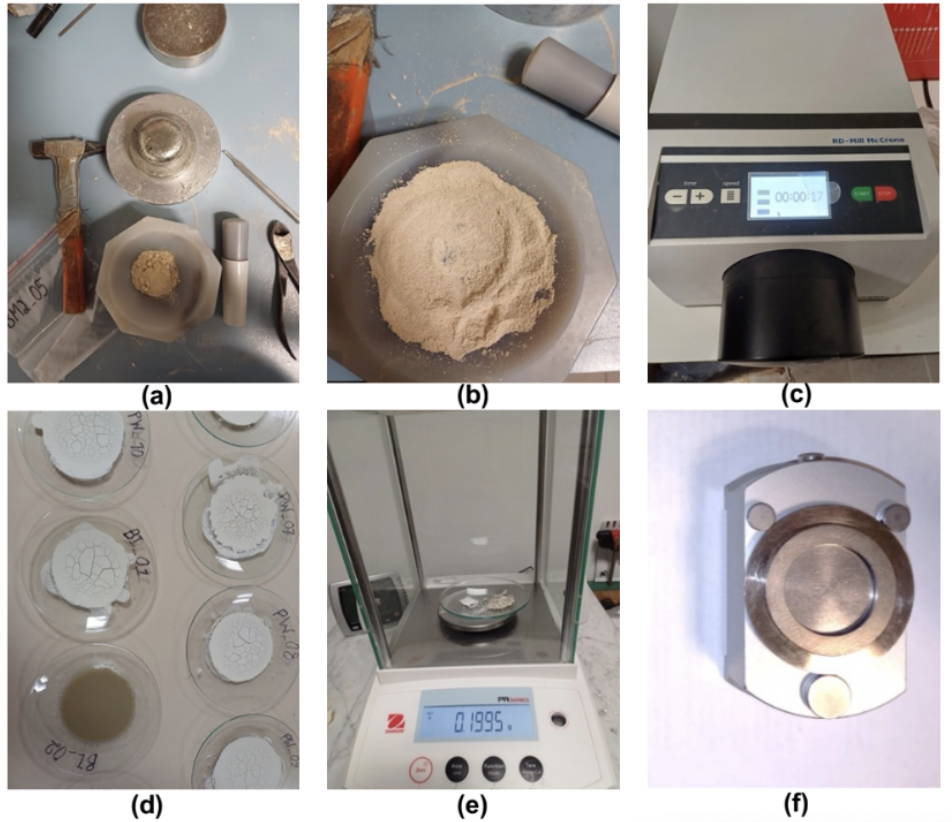 Preparation of the XRPD test specimens: a) pulverization; b) grinding and homogenization; c) phased micronization; d) drying out; e) weighing the test samples and zincite for referencing; f) sample holder with back-loading technique.
4.2.3 Scanning Electron Microscopy (SEM)
SEM provides detailed examination of mortar microstructure at much higher magnification than optical microscopy.
Combined with Energy Dispersive Spectroscopy (EDS), it allows elemental composition to be measured at selected points or areas. This is particularly important for identifying calcium-, silicon-, aluminium- and magnesium-rich reaction products and analysing binder–aggregate interfaces.
4.2.4 Nuclear Magnetic Resonance (NMR)
NMR is employed principally to obtain additional information about the binder and silicate environments.
It complements XRPD because it can provide evidence concerning poorly crystalline or amorphous reaction products that may not be adequately identified through conventional diffraction.
4.2.5 Mechanical Tests
Mechanical characterization comprises scratch testing and compressive-strength testing.
The scratch test provides comparative information concerning surface resistance/hardness, while compression testing establishes the load-bearing resistance of selected mortar specimens.
Because historic samples are irregular and heterogeneous, the results are interpreted in relation to sample geometry, internal imperfections, composition and mineralogical characteristics rather than treated as ideal standardized material values.
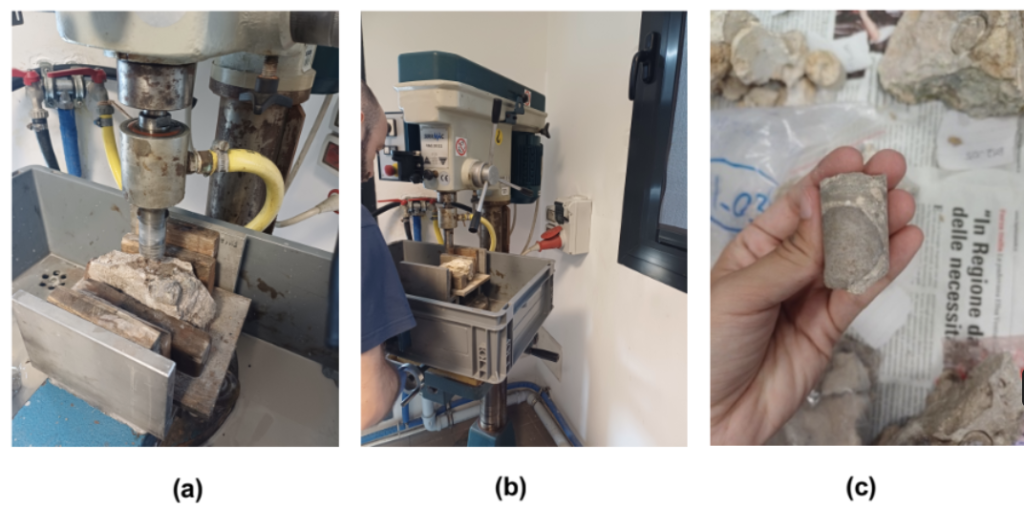 Core drilling was performed using a SERRMAC RAG 20/22 PGM drill press at the laboratory of the Department of Geosciences (UNIPD).
CHAPTER 5 – RESULTS AND DISCUSSION
This is the central analytical chapter. Results from the 24 samples are examined first as bulk materials, then at binder level, and finally in terms of mechanical performance.
5.1 Bulk Samples
Bulk-sample analysis establishes the overall mineralogical and petrographic characteristics of the mortars, incorporating both binder and aggregates.
5.1.1 X-ray Powder Diffraction
XRPD identifies quartz, calcite, plagioclase and K-feldspars, together with smaller quantities of phyllosilicates, as recurring mineral phases.
Calcite is the predominant carbonate. It derives partly from carbonation of calcium hydroxide and partly from carbonate aggregates such as limestone.
Aragonite and vaterite are also identified. Their presence reflects transformations associated with carbonation and ageing and provides indirect evidence of hydraulic/pozzolanic reactions.
All samples also contain significant quantities of calcium-aluminate-hydrate-related AFm phases, principally monocarbonate and, in some cases, hydrocalumite.
Taken together, these phases provide strong evidence that the mortars cannot be interpreted simply as conventional aerial lime mortars. Their mineralogy demonstrates substantial hydraulic behaviour.
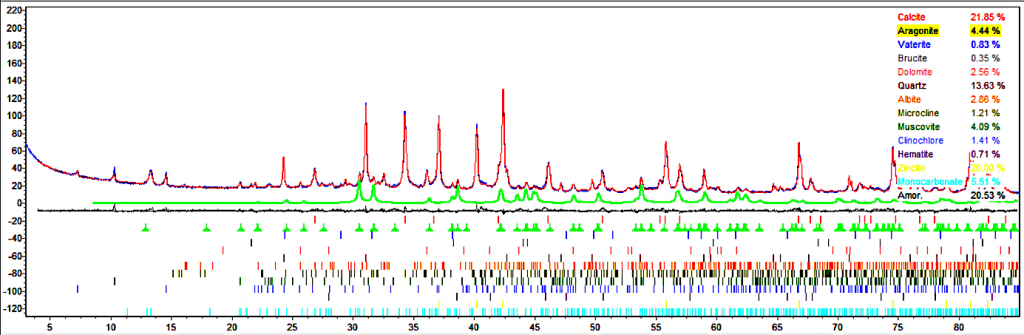 XRPD results of sample PW_07 show the presence of a variety of mineral phases.
5.1.2 Optical Microscopy
Optical microscopy reveals considerable variation in binder-to-aggregate proportions, aggregate types and microstructural characteristics.
A major chronological trend becomes visible: communal and Carrarese mortars tend to contain a higher aggregate proportion, whereas Renaissance mortars are generally richer in binder.
The Renaissance mortars also exhibit evidence of more controlled aggregate selection and grading. Their aggregates show a more clearly defined size classification and a more consistent, unimodal distribution, suggesting a more standardized production process.
Ceramic and fired-brick fragments occur particularly in later mortars. These inclusions provide evidence for material reuse and may simultaneously have contributed reactive silica and alumina, increasing hydraulicity.
Lime lumps and distinctive internal features in several Renaissance samples also become important evidence for the interpretation of hot-mixing technology.
5.1.3 SEM-EDS
SEM-EDS confirms and expands the petrographic observations.
Elemental analyses reveal calcium-, silicon-, aluminium- and magnesium-bearing phases associated with hydraulic reactions. The interfaces between binder and reactive aggregate show evidence of substantial chemical interaction rather than merely physical contact.
The results support the formation of C-S-H, C-A-H and C-A-S-H phases.
A particularly significant process involves dolomitic aggregates. Dedolomitization and associated alkali-carbonate/alkali-silicate reactions promote the development of magnesium-bearing phases, including M-A-S-H, increasing the hydraulic character of the mortar.
The microscopy also confirms differences in reaction intensity and microstructure among chronological groups.
5.2 Binder Analysis
Binder-specific analyses seek to remove or reduce the influence of coarse aggregates and identify the nature of the binding material more directly.
The combined results confirm that the mortars throughout the wall systems were based predominantly on natural hydraulic lime rather than purely aerial lime.
5.2.1 X-ray Powder Diffraction
XRPD of binder-rich fractions reinforces the evidence for hydraulic reaction products.
The occurrence of calcium silicate-, aluminate- and aluminosilicate-related hydrated phases supports the interpretation that the lime possessed intrinsic hydraulic properties.
Comparison between chronological groups also indicates that hydraulic reactions became more pronounced in later mortars, particularly in the Renaissance samples.
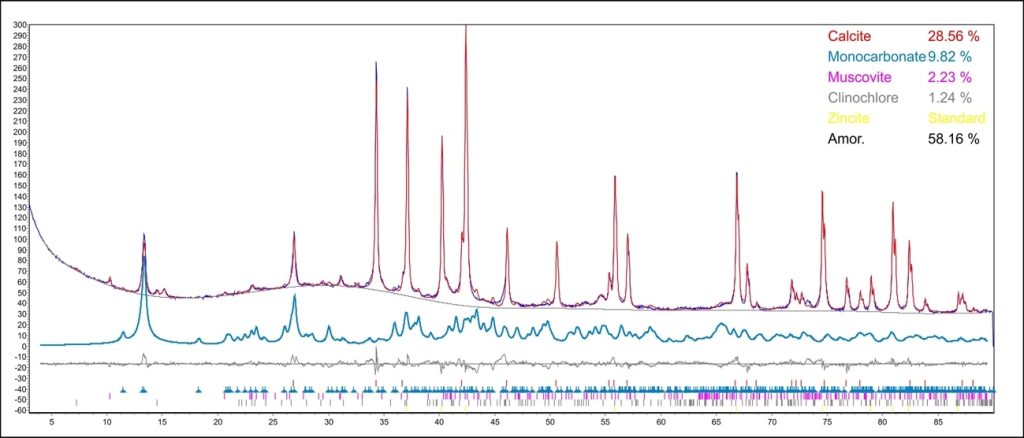
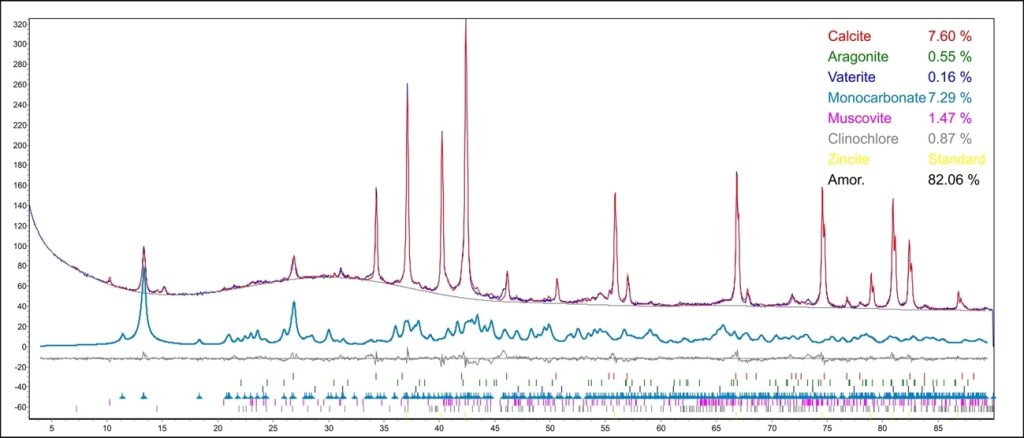 XRPD results of the analyses on the binder fractions.
5.2.2 Nuclear Magnetic Resonance
NMR complements XRPD by identifying silicate environments associated with hydraulic binder phases, including poorly crystalline components.
The results support the existence of C-S-H-type structures and therefore strengthen the conclusion that the mortars exhibit genuine hydraulic behaviour.
The later mortars show stronger evidence for developed hydraulic reaction products, consistent with observations from microscopy and diffraction.
5.2.3 Scanning Electron Microscopy – Energy Dispersive Spectroscopy
Binder-level SEM-EDS confirms the elemental composition of the hydraulic phases and provides further evidence of reaction between lime and silica/alumina-bearing components.
The combined chemical and morphological evidence strengthens the interpretation of a naturally hydraulic binder supplemented in some samples by reactive aggregates.
The raw material used for the binder is ultimately associated with marly limestone from the Euganean Hills, providing an important connection between construction technology and the local geology of the Padua region. The dissertation therefore shows that local resource availability influenced the historic production of construction materials.
5.3 Mechanical Tests
Mechanical testing investigates whether the chronological and mineralogical differences identified analytically correspond to measurable changes in material performance.
5.3.1 Scratch Test
Scratch testing provides a comparative assessment of resistance across selected mortar surfaces.
The results reinforce the broader conclusion that mechanical behaviour varies considerably among samples and depends on binder characteristics, aggregate distribution, hydraulic reaction products and local imperfections.
The test is consequently treated as complementary rather than as a standalone indicator of mortar quality.
5.3.2 Compressive Strength Test
Compression testing demonstrates a meaningful relationship between production technology, hydraulicity and mechanical performance.
Strength varies because historic samples contain imperfections and heterogeneous constituents. Porosity, cracks, aggregate arrangement, binder quantity and degree of hydraulic reaction all affect measured values.
Nevertheless, a clear chronological tendency emerges. Renaissance mortars generally achieve higher strengths, with values reaching approximately 14 MPa.
The higher values correlate with several characteristics already identified through mineralogical and microscopic analyses: greater binder content, stronger hydraulic reactions, improved aggregate selection, more extensive C-S-H formation and more sophisticated production methods.
The mechanical results therefore support rather than stand apart from the archaeometric interpretation.
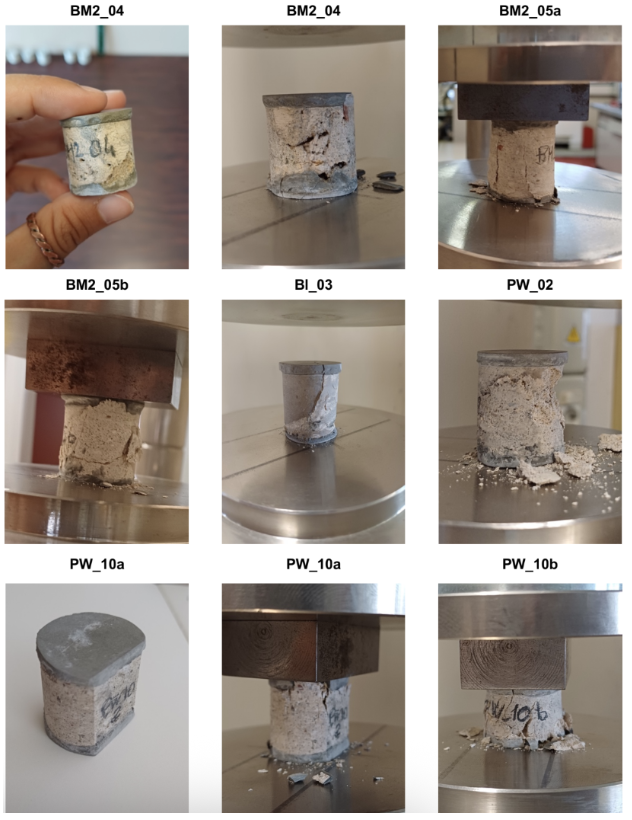 Failure of the specimens occurred because of different causes.
CONCLUSIONS
Clarysse concludes that Padua’s defensive walls preserve evidence of a substantial technological evolution in mortar production between the medieval and Renaissance periods.
The first major conclusion is the confirmation of natural hydraulic lime across all the wall systems examined. Reactive silica and alumina combined with calcium to form C-A-H, C-A-S-H and C-S-H phases. Reactions associated with dolomitic aggregates further produced magnesium-bearing phases such as M-A-S-H, increasing the hydraulic character and potential strength of the mortars.
The second major conclusion concerns chronological technological development. Earlier communal and Carrarese mortars generally contain more aggregate relative to binder. Renaissance mortars are comparatively fatter, with a higher binder content. They also contain a greater prevalence of C-S-H phases and exhibit more extensive carbonation, consistent with stronger binding systems.
Material selection also became more sophisticated. Ceramic and fired-brick fragments occur in later mortars and provide evidence of material reuse as well as potential deliberate exploitation of pozzolanic behaviour. Renaissance aggregates show more systematic size classification and a unimodal distribution, indicating more controlled production.
One of the dissertation’s most significant technological findings is evidence for hot mixing in Renaissance mortars. Clarysse associates this interpretation with large lime lumps containing calcitic veins, strong reactivity, extensive binder–aggregate interaction, relatively low porosity and secondary mineral precipitation within voids.
The geological provenance of the binder is also significant. The research links the natural hydraulic lime to the calcination of marly limestone from the Euganean Hills, demonstrating how local geology shaped historic Venetian construction technology.
Mechanical results support the mineralogical interpretation. Renaissance samples attain compressive strengths of up to approximately 14 MPa, with higher values associated with improved materials, hydraulic reactions and production techniques. At the same time, Clarysse stresses that imperfections and heterogeneity can significantly influence individual strength measurements.
Overall, the thesis demonstrates that the mortar technology of Padua’s defensive walls evolved from relatively aggregate-rich medieval mixtures towards more binder-rich, controlled and technologically sophisticated Renaissance mortars. This development involved better aggregate selection, greater exploitation of hydraulic and pozzolanic reactions, reuse of ceramic materials and techniques such as hot mixing.
Most importantly from a conservation perspective, the dissertation demonstrates why archaeometric characterization should precede restoration. Understanding original binder chemistry, aggregate characteristics, hydraulicity, porosity and mechanical performance provides the scientific basis for designing compatible repair mortars. The results therefore contribute not only to understanding historical Venetian construction technology but also directly to future conservation strategies for Padua’s walls and comparable historic masonry structures.
Subscribe to our Newsletter
Receive every month our top articles about rehabilitation and preservation of historical constructions, information about job opportunities and much more.


